 Nations Unies
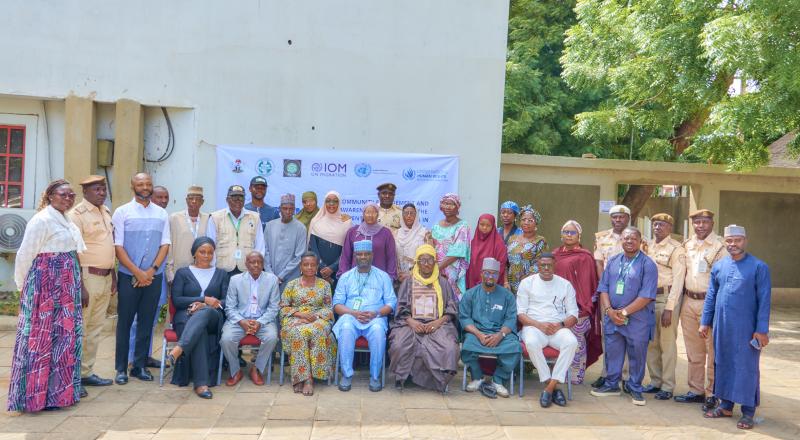
Community leaders, government institutions, civil society and UN partners gather in Sokoto and Illela border communities to strengthen prevention, safe reporting and referral of trafficking in persons and smuggling of migrants.
On 22 and 24 July 2026, the Office of the United Nations High Commissioner for Human Rights (OHCHR), through its Protection of Migrants project (PROMIS), joined the National Human Rights Commission (NHRC) and the Network Against Child Trafficking, Abuse and Labour (NACTAL) to convene a community engagement and awareness campaign in Sokoto State. The initiative brought together 33 participants (22 men and 11 women) representing community-based organizations, traditional institutions, organizations of persons with disabilities, faith-based organizations, the media, government institutions and United Nations partners, reflecting a shared commitment to protecting the rights and dignity of migrants and persons at risk of trafficking.
A rights-based approach to prevention and protection
The engagement placed communities at the centre of efforts to prevent trafficking in persons and the smuggling of migrants. Discussions focused on early identification, safe reporting and effective referral, grounded in respect for human rights. Participants examined the distinction between trafficking and smuggling, common indicators and recruitment methods, and emerging risks associated with online recruitment and false promises of work or travel. Sessions also addressed the rights of migrants, trafficked persons and other individuals at risk, reaffirming that protection must be guided at every stage by dignity, confidentiality, non-discrimination, informed consent and the principle of do no harm.
Opening remarks were delivered by OHCHR, NHRC, NACTAL, the International Organization for Migration (IOM) and the United Nations Office on Drugs and Crime (UNODC). Speakers underscored the essential role communities play in preventing trafficking and smuggling and encouraged local actors to share practical experience so that responses on the ground remain anchored in human rights principles.
Communities as first responders
Participants observed that suspected cases of trafficking are most often identified first at the community level, through traditional leaders, community action and surveillance teams, neighbourhood watch groups, women's and youth groups, transport workers and civil society organizations. They emphasized that referral is not simply a matter of directing a person to another agency; it requires actively supporting that person to safely reach the appropriate service provider, ensuring continuity of care and protection throughout the process.
A multi-stakeholder panel further explored local realities, referral pathways and community-based protection mechanisms. Panelists discussed warning signs that communities should remain alert to, including children or young persons travelling under unclear arrangements, suspicious promises of work, education or travel, children working long hours or living on the streets, individuals moving with unrelated adults, and persons who appear controlled or unable to speak freely. The important role of transport workers and their unions in recognizing suspicious movement and alerting the relevant authorities was also highlighted.
Extending outreach to border communities
On 24 July, the campaign extended to the Illela border communities, where advocacy visits reinforced the message of shared responsibility for prevention. Delegations met with the Palace of the District Head of Illela under the Sultanate Council, the Chief Imam of Illela Central Mosque, local youth leaders, the National Union of Road Transport Workers (Illela Branch), members of the Illela Women Group and the Save the Child Initiative Illela Border Office and Shelter. Information materials on trafficking in persons, migrant smuggling, and safe reporting and referral pathways were distributed to sustain awareness within these communities.
A shared commitment going forward
The engagement concluded with a collective commitment among all stakeholders to strengthen community ownership of prevention efforts, sustain awareness-raising in local languages, and improve referral arrangements in line with the revised National Referral Mechanism. Partners further agreed to continue engaging women, youth, persons with disabilities, transport workers, and traditional and religious leaders as essential partners in the shared effort to prevent trafficking in persons and the smuggling of migrants, and to protect the rights of all those affected.