 Nations Unies
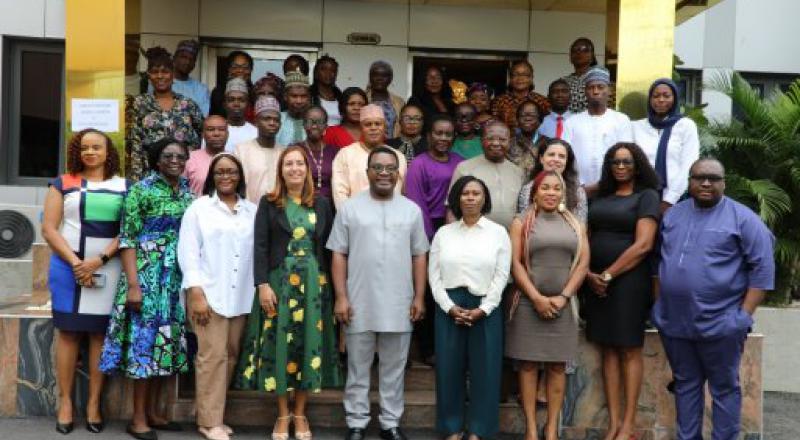
Limited access to information on the protection of migrant’s workers, limited knowledge on national and international legal frameworks protecting migrants, lack of adequate collaboration among CSOs, government, and other actors were identified as some of the challenges facing CSOs in the effective protection of the rights of migrants during the two-day training of CSOs on the Human Rights Based Approach to migration.
The training, organized by the Office of the United Nations High Commissioner for Human Rights (OHCHR), within the framework of the PROMIS project and in partnership with the National Human Rights Commission (NHRC) in Nigeria is aimed at strengthening the capacity of CSOs, specifically victim’s organizations and CSOs working on migration issues to integrate a human rights-based approach into their work and to provide victims with information about their human rights. The training was attended by 28 participants (08 males, and 20 females) from CSOs in Lagos, Edo, and Abuja.
On behalf of the Executive-Secretary of the NHRC, Chief Tony Ojukwu, the Senior Human Rights Adviser of NHRC, Mr. Hilary Ogbonna, emphasized the need for government and civil society to work together, to tackle migration issues. He noted that migration is an exercise of the fundamental rights to freedom of movement and association; and human rights during the migratory activities should be promoted and protected. He stated that for this to be achieved, “government and CSOs, needs to work closely together to be able to protect these rights”.
The UN Senior Human Rights Advisor (SHRA) in Nigeria, Ms. Adwoa Kufuor-Owusu, noted that violations of migrant’s rights and related abuses have become an issue of global concern. She stated the training is a platform to “deepen understanding of the intricacies of migration and to reaffirm commitment to core human rights principles of dignity, equality, and nondiscrimination for everyone”.
Mr. Aihawu Victor, Director of Centre for Youths Integrated Development, in his opening remarks, highlighted that there are lots of emerging human rights abuses at international borders in Nigeria and this training cannot come at a better time. For example, he noted there have been increase in reported cases of sexual exploitation and abuse of migrants at the border trying to come into the country at Seme border in Lagos State, Nigeria. “There is a lot going on now and this is the right time to have this knowledge”.
In the discussions during the training, it was recommended to further strengthen CSOs to promote the rights of migrants, including through more capacity building on human rights and migration, increased sensitization, and awareness raising to educate the public on the rights of migrants, partnerships between actors working on migration, development and maintenance of a database to ensure availability of disaggregated information about migrants in Nigeria.
At the end of the two-day training, the first meeting of the National Working Group on Human Rights and Migration was held with all the CSOs in attendance. The meeting was chaired by NHRC with three co-chairs, including the National Agency for the Prohibition of Trafficking in Persons (NAPTIP), Nigerian Immigration Service (NIS), and National Commission for Refugees, Migrants and IDPs (NCFRMI). The meeting was also attended by the Nigerians in Diaspora Commission (NIDCOM), Federal Ministry of Justice and IOM.
The Terms of Reference of the working group was adopted and a committee was setup to develop the workplan for the working group for 2024. It was also agreed that a database of members will be developed and maintained for the coordination of activities of the working group. OHCHR will follow-up on these action points and ensure that they are implemented.