 Nations Unies
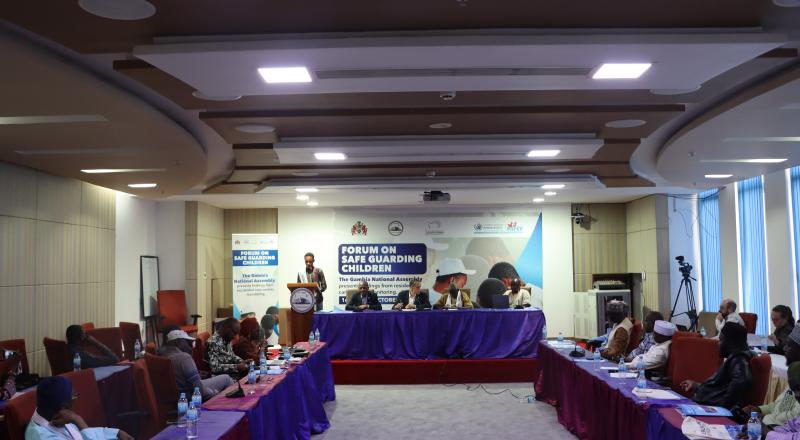
Supported by OHCHR-WARO’s PAPEV project, members of three National Assembly committees visited 22 child care residential centres across the country in July 2026. At a national forum in October 16-17, they shared their findings and called for immediate measures to better protect children in care.
Members of the National Assembly Select Committee on Gender, Children and Social Welfare, the Committee on Human Rights and Constitutional Matters, and the Committee on Health, Disaster, Humanitarian Relief and Refugees have taken a closer look at how children in residential care live.
The initiative grew out of a capacity-building forum for the three committees in April 2024, where lawmakers voiced concern about conditions in the centres. The discussions produced a roadmap with three steps: an orientation on minimum standards for childcare residential centres, a nationwide monitoring visit, and a forum to share findings and recommendations.
In April 2025, the members were briefed on the Minimum Standards for child care residential centres. The document was developed by the Ministry of Gender in 2023 with support from the OHCHR PAPEV Project. It sets out the operational, safety and care requirements needed to protect the rights and welfare of children living in the centres.
In July 2026, with OHCHR-WARO support through the PAPEV Project, the members visited 22 centres across the regions of The Gambia. They assessed the children’s living conditions, safety and welfare, with a view to making recommendations to the relevant government institutions.
On 16 and 17 October 2026, a two-day forum presented the results of the visits. It brought together 29 National Assembly members and their staff, as well as two visiting parliamentarians from Guinea and Guinea-Bissau. Also present were centre operators, government representatives, child-focused civil society organisations, the Children’s Assembly, the media, and development partners from OHCHR-WARO and UNICEF.
The exchanges between lawmakers and operators were frank and constructive. They centred on five key areas. The first was the environment and physical safety of children, including accommodation, location and infrastructure. The second was personal care, health and nutrition, from balanced meals and clean water to hygiene and medical services. The third was safeguarding and protection against abuse, neglect and exploitation, including birth certificates and documentation, particularly for children from other countries, and the keeping of records on each child. The fourth was education, development and recreation, covering formal schooling, vocational and life skills, and access to recreational activities. The fifth was children’s regular contact with their families.
Participants agreed that conditions need to improve in all of these areas and that action should start immediately. Their recommendations will be included in the report of the monitoring mission.
The forum recommended a national stakeholder meeting to validate the findings, agree on responsibilities and timelines, and develop an implementation matrix to monitor progress. The National Assembly will table the report, and the relevant ministries will be tasked with implementing the recommendations that fall under their mandates.
The goal of the visits and their follow-up is clear: necessary action must be taken so that children living in residential care centres enjoy the same rights and protection as those living with their families.