 Nations Unies
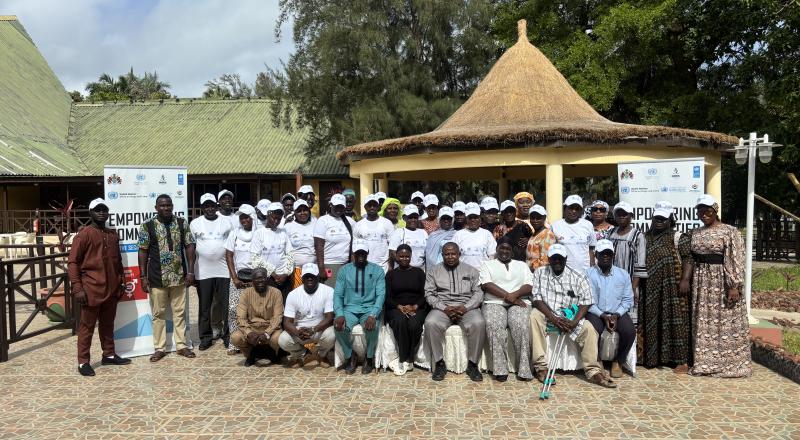
Building trust between citizens and security institutions is essential to The Gambia's ongoing democratic transition and peacebuilding efforts. To advance this objective, OHCHR and UNODC, in partnership with the Office of National Security (ONS), the National Human Rights Commission (NHRC), the Office of the Ombudsman and the CSO Coalition on Security Sector Reform (SSR), implemented Phase II of the project "Enhancing Public Trust, Accountability and Participation in Security Sector Reform Through Community Engagement and Media Outreach in The Gambia," with support from the Peacebuilding Fund.
From 6 to 9 July 2026, the initiative brought together 133 participants, including 78 women, 63 youth and 8 persons with disabilities, from Banjul and Kanifing Municipality. The gathering aimed to strengthen public understanding of Security Sector Reform, increase awareness of accountability and complaint reporting mechanisms, and promote inclusive participation in security governance.
"Security Sector Reform cannot succeed without the meaningful participation of communities," participants heard during the opening session. Speakers emphasized that sustainable reform requires citizens to be informed, empowered and actively engaged in shaping security policies and institutions.
Representatives from the Office of National Security provided an overview of the SSR process, highlighting its role in strengthening accountability, transparency and professionalism within security institutions. The discussion underscored the importance of ensuring that reforms remain people-centred and responsive to the security needs of all Gambians, while also promoting gender inclusion and women's participation in security governance.
Civil society representatives stressed that Security Sector Reform is a shared responsibility requiring strong partnerships between state institutions, communities and civil society organizations. Participants reflected on the progress made so far and discussed persisting challenges, including limited resources, coordination gaps and the continued need to strengthen trust between citizens and security actors.
The National Human Rights Commission and the Office of the Ombudsman highlighted the importance of human rights, democratic oversight and the rule of law in ensuring an accountable and effective security sector. Participants learned about available complaint and redress mechanisms and how oversight institutions support accountability by addressing grievances and promoting transparency within public institutions.
A key feature of the initiative was a community dialogue session, which gave citizens a platform to openly share their concerns, experiences and expectations regarding security and governance. Participants welcomed the opportunity to engage directly with security institutions and oversight bodies, noting that such exchanges contribute to greater transparency and mutual understanding. Discussions touched on issues affecting communities, including crime, drug trafficking and substance abuse, youth unemployment, youth gangs, corruption in public services, border security, police-community relations and access to justice.
Young people challenged perceptions that they are unwilling to work, pointing instead to the lack of employment opportunities and limited pathways to economic empowerment. Community members also called for stronger action to address drug abuse, enhance accountability within public institutions and improve public confidence in state services.
Through open dialogue and community engagement, the initiative strengthened awareness of SSR processes and reporting mechanisms, while reinforcing the principle that meaningful reform must be driven by the voices and experiences of the people it seeks to serve.
As The Gambia continues its reform journey, initiatives such as this demonstrate that inclusive participation, respect for human rights and strong accountability mechanisms are critical to building public trust and creating a security sector that is professional, transparent and responsive to the needs of all citizens. Through the combined efforts of OHCHR, UNODC, ONS, NHRC, the Office of the Ombudsman and the CSO Coalition on SSR, communities are increasingly becoming active partners in shaping a safer, more accountable and democratic future for The Gambia.